
Introduction: The New Era of Scalable Marketing
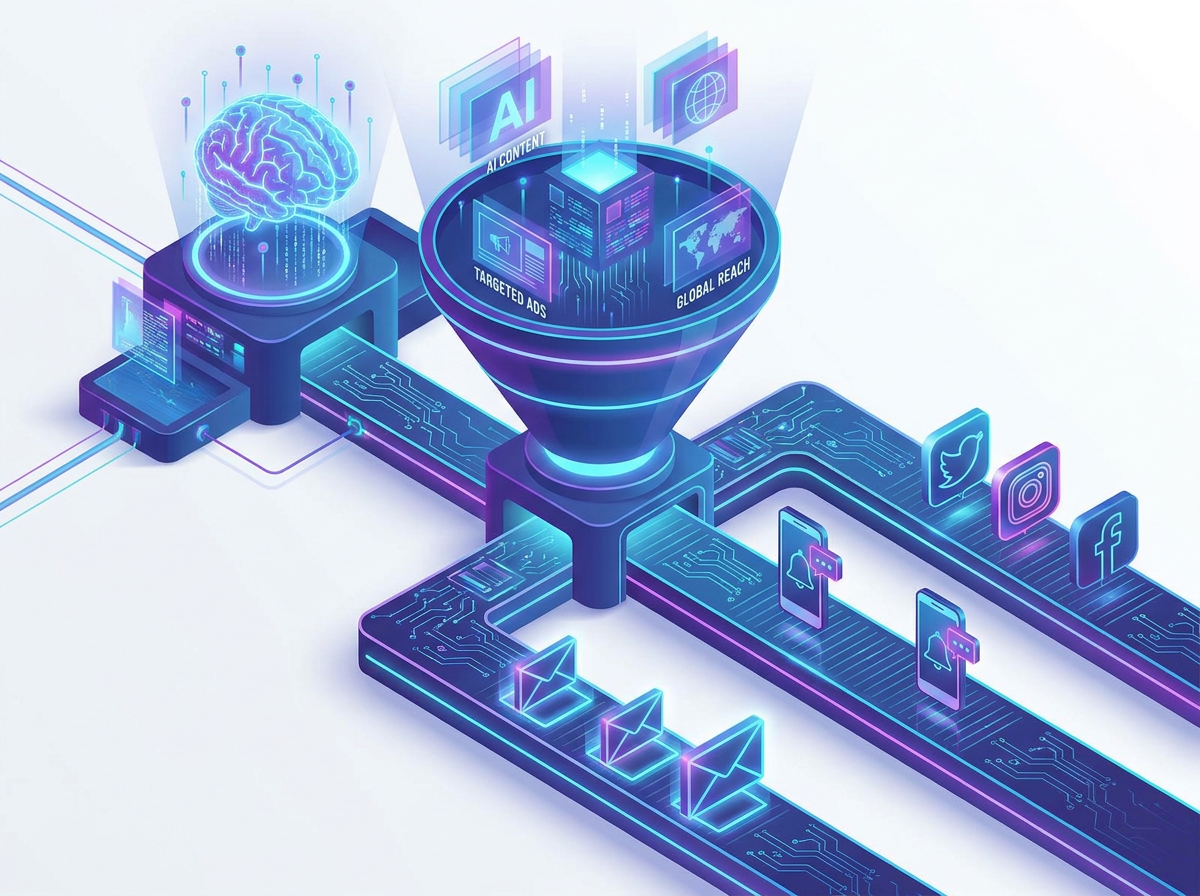
Every ambitious marketing team eventually hits the same wall: the relentless demand for high-quality, targeted content. When trying to scale campaigns manually, marketers face a daunting struggle. Copywriters become overwhelmed, creative approvals drag on for weeks, and deployment schedules slip. In today’s hyper-competitive digital landscape, relying purely on manual content creation is a guaranteed way to lose momentum. This is where an AI content generator for marketing automation changes the game.
An AI content generator for marketing automation isn't just a basic writing assistant; it is a sophisticated, integrated engine designed to produce contextual, brand-aligned messaging directly within your campaign workflows. For modern marketing operations teams seeking to multiply their output without sacrificing an ounce of quality, this technology serves as the ultimate solution. By leveraging AI to fuel your automation systems, you transition from creating one-off messages to orchestrating limitless, dynamic conversations.
Breaking the Manual Content Bottleneck
In traditional marketing workflows, content creation acts as the ultimate bottleneck. An automation platform is incredibly fast at routing emails, triggering ads, and updating CRM records, but it sits idle waiting for human creators to draft the actual copy. Whether it’s an urgent promotional blast, a multi-stage nurturing sequence, or segmented social media updates, human bandwidth heavily limits campaign velocity.
Transitioning to AI-driven generation inherently shatters these limitations. By feeding robust prompts, brand guidelines, and target data into an intelligent system, your team can generate hundreds of high-converting variations in seconds. This eliminates the dreaded "blank page syndrome" and prevents campaign deployment delays.
"By integrating AI content generators into marketing automation workflows, organizations have demonstrated a significant increase in campaign deployment velocity, effectively breaking the traditional bottlenecks of manual content creation while maintaining personalization at scale."
— Global Research Association (2026) in Journal of AI Marketing Automation SaaS Strategy
By effectively removing the friction between ideation and execution, marketers are freed to focus on strategy, performance analysis, and creative direction, allowing automated systems to handle the heavy lifting of production.
How to Integrate AI with Your Marketing Automation Stack
Understanding the value of an AI content generator for marketing automation is only half the battle; integrating it effectively into your daily operations is where the true ROI lies. Connecting AI to platforms like HubSpot, Marketo, or Salesforce requires a strategic approach to ensure seamless data flow.
- Leverage Native API Integrations: Start by utilizing APIs to connect your chosen AI generator directly to your CRM and marketing platforms. This structural link ensures that data can pass back and forth securely, enabling the AI to read segment criteria and output copy directly into draft folders or active nodes.
- Map Your Automated Triggers: Define exact behavioral triggers that prompt content generation. For example, if a prospect downloads a specific whitepaper, a webhook can trigger the AI to draft a personalized follow-up sequence based on the prospect's industry and job title.
- Establish Content Guardrails: Input your brand voice documentation, negative keywords, and compliance rules directly into the AI’s central instructions. This safeguards your brand identity across all automated outputs.
- Implement a Human-in-the-Loop Workflow: In the initial stages, route AI-generated content through an approval queue within your automation tool. As confidence in the system grows, you can move toward fully autonomous publishing for specific low-risk channels.
Here at MarPal, we've seen that businesses that systematically map their automated triggers to AI generation capabilities experience the most dramatic workflow enhancements.
Accelerating Time-to-Market Across All Channels
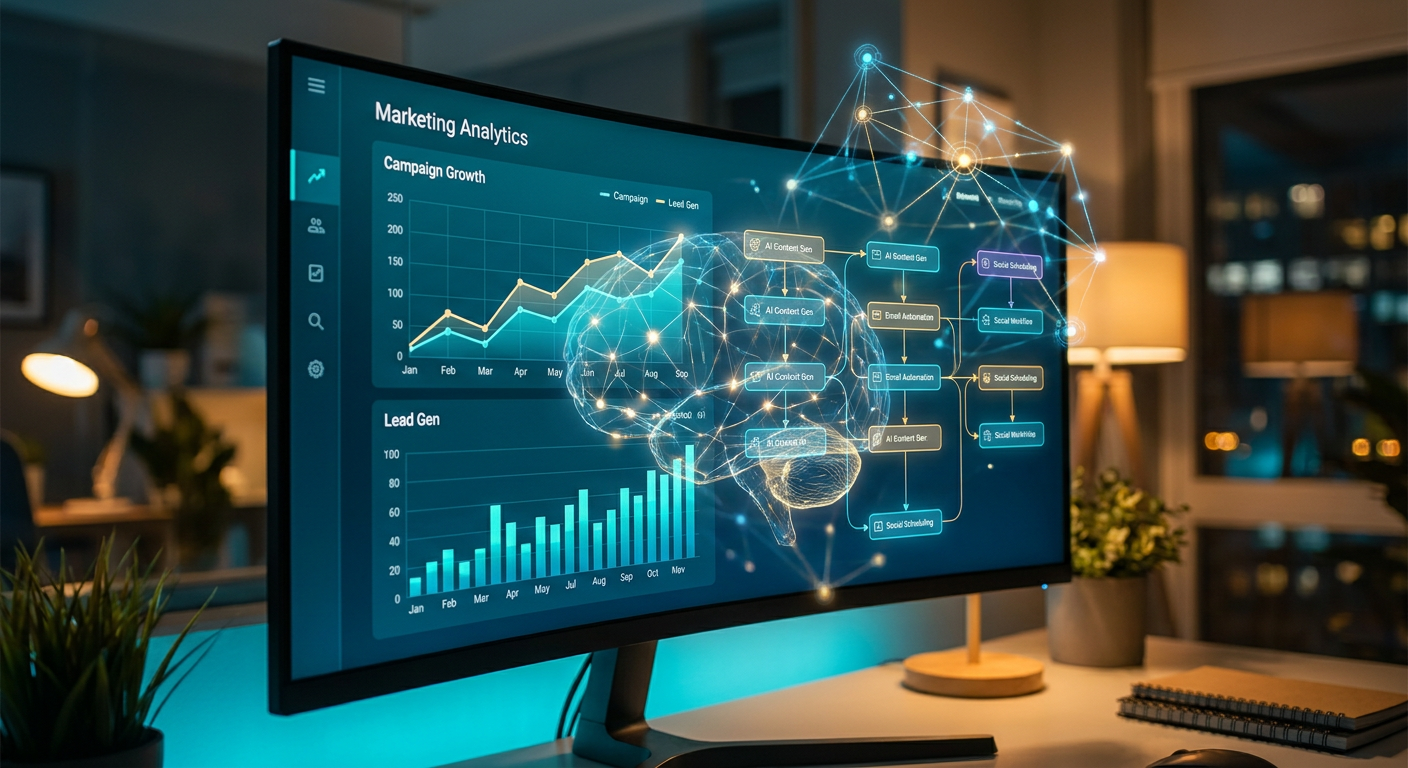
The speed at which a brand can react to market trends, customer behaviors, or internal product launches dictates its competitive advantage. When algorithmic content generation is paired intimately with automated distribution, time-to-market shrinks dramatically. A holistic AI content generator for marketing automation can simultaneously create an overarching email campaign, craft the corresponding social media posts, and generate the paid search ad copy—all perfectly synced to your brand guidelines.
This synergy ensures cohesive cross-channel engagement. Because the AI is trained on your specific brand voice, you never have to worry about a disjointed customer experience. Whether a buyer sees your message on LinkedIn, via a push notification, or in their email inbox, the tone, messaging, and calls-to-action remain unified.
"The true scalability of modern marketing relies on algorithmic content generation paired with automated distribution. Organizations leveraging these AI frameworks reduce campaign time-to-market by up to 60%, ensuring continuous cross-channel engagement without sacrificing brand voice."
— Global Research Association (2026) in Journal of AI Marketing Automation SaaS Strategy
Achieving a 60% reduction in time-to-market empowers marketing teams to launch more experiments, run agile A/B tests, and capitalize on fleeting market opportunities that manual teams would entirely miss.
Achieving Hyper-Personalization at Scale
Consumers today have an incredibly low tolerance for generic marketing. They expect brands to understand their specific pain points, industry nuances, and stage in the buyer's journey. Doing this manually at high volume is mathematically impossible. A copywriter cannot craft 500 unique emails for 500 different segmented lists in a single afternoon.
However, when an AI content generator for marketing automation is fed live user data from your CRM—such as browsing behavior, past purchase history, geographic location, and demographic data—it can dynamically generate hyper-personalized content on the fly. The AI analyzes these behavioral signals and alters the subject lines, value propositions, and emotional hooks to perfectly match the individual reader.
This level of contextual relevance drastically improves open rates, click-through rates, and ultimately, conversions. It shifts the paradigm from "one-to-many" marketing to true "one-to-one" communication at scale, providing the personalized touch of a dedicated account executive to millions of prospects simultaneously.
Conclusion: Future-Proofing Your Marketing Strategy
The transition toward highly integrated, automated content ecosystems is well underway. The struggle to scale campaigns manually is a pain point of the past for organizations willing to embrace modern technological workflows. By implementing an AI content generator for marketing automation, teams can successfully break manual bottlenecks, integrate intelligently with existing CRMs, accelerate their time-to-market, and deliver hyper-personalized experiences to every single user.
As marketing continues to evolve, relying on intelligent automation is no longer a luxury; it is a fundamental necessity for competitive, high-velocity campaign scaling and sustainable business growth. As you look to the future, consider how solutions powered by MarPal can help you weave AI seamlessly into your marketing DNA, unlocking unprecedented scale and undeniable ROI.