
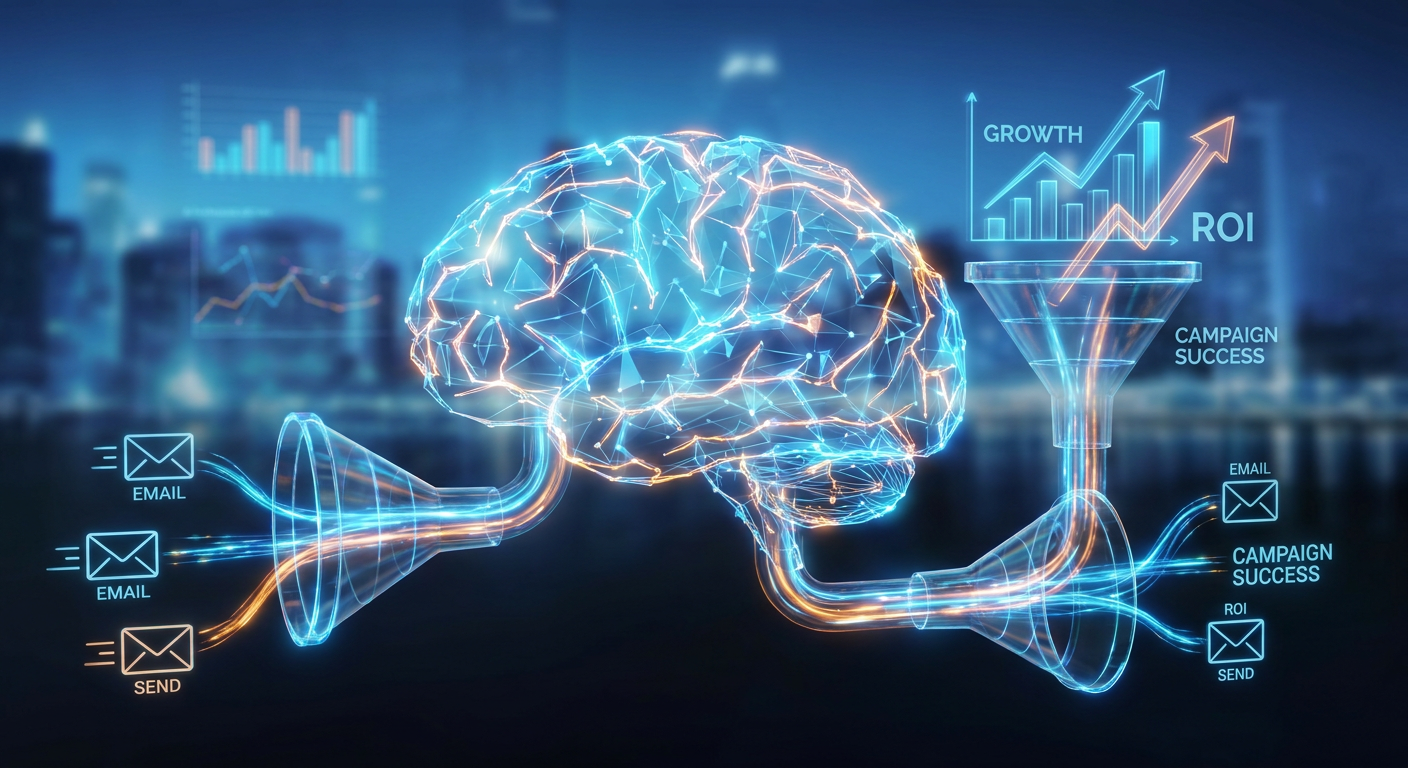
Introduction: The New Standard for Scaling Campaigns in 2026
Modern marketing teams are facing an unprecedented set of escalating demands. In an era where consumers expect immediate, personalized interactions, businesses are pushed to deliver high-volume, multi-channel campaigns without missing a beat. But here is the stark reality: you cannot simply brute-force your way to growth. Attempting to scale campaigns by linearly increasing your marketing budget or expanding headcount often leads to diminishing returns and severe team burnout.
Enter the defining technological shift of the year. Utilizing ai software for marketing automation is no longer just a futuristic concept; it is the definitive solution to scale campaigns effectively. By integrating artificial intelligence into your marketing stack, organizations can automate complex workflows, analyze vast datasets in real-time, and execute personalized strategies at a massive scale—without proportionally increasing overhead.
In this comprehensive guide, we will explore the strategic insights required to future-proof your marketing operations. From transitioning out of rigid rule-based logic to achieving hyper-personalization and optimizing your customer acquisition costs (CAC), we will uncover how AI-driven tools are reshaping the marketing landscape in 2026.
The Evolution: Moving from Rule-Based Logic to Predictive AI
For years, marketers relied heavily on traditional marketing automation platforms governed by strict "if/then" rules. While these systems were revolutionary in their time, they are inherently limited by manual bottlenecks. If a customer diverged from the predefined path, the rigid workflow would fail to adapt, resulting in lost engagement and missed revenue opportunities.
Today, advanced ai software for marketing automation has shattered these limitations by utilizing predictive models. Instead of relying on static rules, these intelligent systems dynamically segment audiences and adjust campaigns in real-time based on actual user behavior and intent signals. This eliminates the tedious bottleneck of manual rule creation and allows your marketing infrastructure to learn and evolve continuously.
"To effectively scale marketing campaigns in 2026 and beyond, organizations must transition from rule-based automation to predictive AI models. This shift allows for dynamic audience segmentation and real-time campaign optimization without proportional increases in operational overhead."
By leveraging predictive analytics, marketers can anticipate what a prospect is likely to do next. Whether it is predicting the optimal time to send an email or determining which product recommendation will trigger a conversion, AI removes the guesswork, ensuring that your campaigns are always one step ahead of the consumer.
Achieving Hyper-Personalization Across Multiple Channels
Scaling a business often presents a frustrating paradox: how do you reach a significantly larger audience while still making every individual feel uniquely understood? The "spray and pray" methodology is definitively dead. Modern consumers demand bespoke experiences, and failing to provide them results in high churn rates and low engagement.
Machine learning algorithms sit at the heart of this solution. They empower marketers to automate multi-channel content delivery while ensuring the customer journey remains deeply and intrinsically personalized. By analyzing thousands of data points—from past purchase behavior and browsing history to demographic subtleties—AI curates the exact message a user needs to see, exactly when they need to see it.
"The most successful AI marketing automation SaaS strategies prioritize hyper-personalization at scale. By leveraging machine learning algorithms, modern marketing teams can automate multi-channel content delivery while maintaining a highly individualized customer journey."
Imagine a scenario where an email campaign, a retargeting ad, and a personalized website landing page all seamlessly adapt to a user’s real-time interactions. This level of cross-channel orchestration ensures a frictionless, highly relevant customer experience that drives loyalty and lifetime value.

Optimizing ROI and Reducing Customer Acquisition Costs
In a tough economic climate, marketing leaders are under immense pressure to justify their spend. Efficiency is paramount. Integrating AI-driven SaaS solutions into your marketing stack has a profound financial and operational impact, shifting the focus from mere volume to highly profitable growth.
When you deploy ai software for marketing automation, you unlock the power of automated, data-backed bidding and predictive targeting strategies. AI systems can automatically reallocate budget to the highest-performing channels and pause underperforming assets in real time. This agility ensures that every dollar is spent efficiently.
"Integrating AI into marketing automation workflows is no longer just a competitive advantage—it is a necessity for scalability. Businesses adopting AI-driven SaaS solutions report significant reductions in customer acquisition costs through automated, data-backed bidding and predictive targeting."
As a result, organizations experience a drastic improvement in conversion rates while driving down their Customer Acquisition Costs (CAC). By targeting only the highest-intent prospects with precision, marketing teams can maximize their Return on Investment (ROI) and present clear, quantifiable value to the C-suite.
Key Features to Look for in AI Software for Marketing Automation
As you prepare to upgrade your marketing tech stack in 2026, selecting the right platform is critical. With so many SaaS providers claiming to be "AI-powered," it is vital to separate genuine machine learning capabilities from simple automation tools. Here is an actionable buyer's guide detailing the essential features your organization must look for:
- Seamless CRM Integration: Your AI software must connect flawlessly with your Customer Relationship Management (CRM) platform. This unified data ecosystem is crucial for feeding the AI accurate, historical customer data to generate reliable predictions.
- Robust Cross-Channel Orchestration: Look for platforms capable of executing campaigns across email, SMS, social media, and web concurrently. The AI should dynamically adjust messaging across these touchpoints based on user engagement.
- Predictive Lead Scoring: Gone are the days of manual point allocation. Top-tier AI systems automatically score leads based on complex behavioral patterns and intent signals, passing only the most qualified prospects to the sales team.
- Generative AI Content Assistance: Modern platforms often include generative capabilities to assist in drafting email copy, ad headlines, and A/B test variations, drastically reducing content creation time.
- User-Friendly Analytics Dashboards: The best data in the world is useless if it is unintelligible. Seek out software that offers intuitive, visual reporting dashboards that translate complex AI insights into actionable business strategy.
Conclusion: Future-Proofing Your Marketing Operations
The marketing landscape is evolving at a breakneck pace, and the methodologies that worked five years ago are rapidly becoming obsolete. Adopting ai software for marketing automation is no longer an optional luxury for enterprise tech companies—it is a baseline requirement for competitive scalability. From shifting away from restrictive rule-based logic to unlocking hyper-personalization at scale and driving down customer acquisition costs, the benefits of AI are transformative.
At MarPal, we understand that scaling a business requires precision, intelligence, and the right technological foundation. Now is the time to audit your current marketing tech stack. Are your tools holding you back, or are they propelling you forward? Embrace AI-driven workflows today, empower your marketing team to focus on high-level strategy, and watch as your campaigns achieve unprecedented, sustainable growth in 2026 and beyond.