
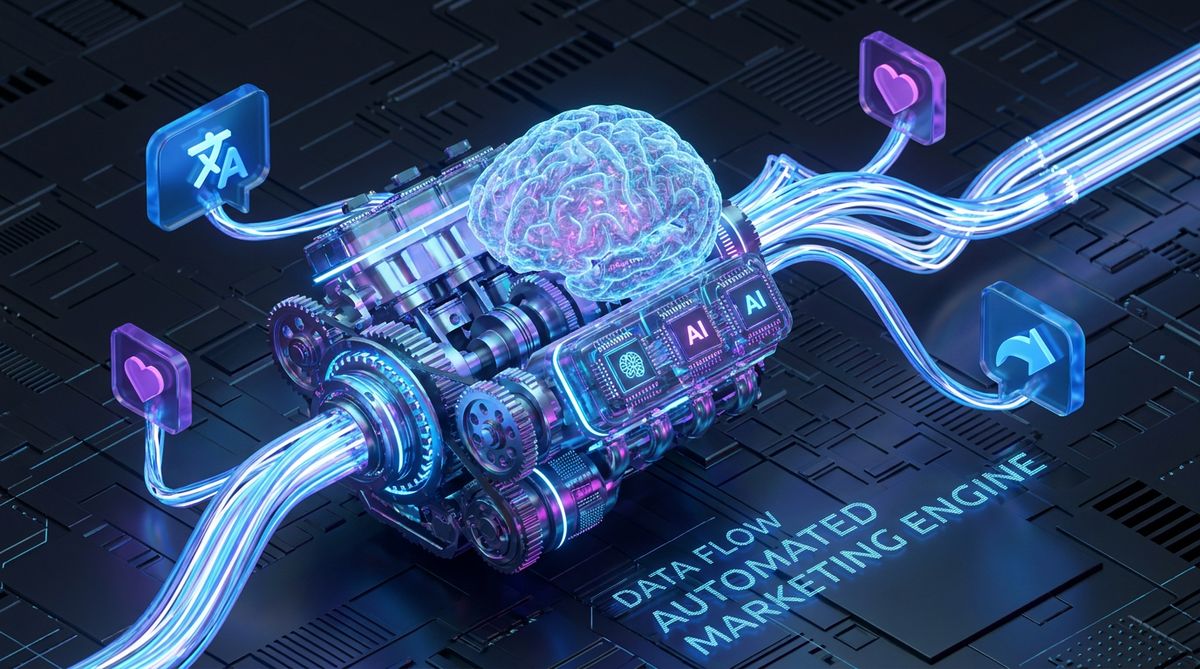
Introduction: The New Era of Automated Social Media Marketing with AI
While the definitive blueprint for this technology was heavily established in 2024, today in 2026, the landscape of digital marketing has been irreversibly transformed. We have entered a golden era where setting up an engine for automated social media marketing with AI is no longer just a bleeding-edge luxury—it is an absolute necessity for scaling a brand's digital footprint. The rapid evolution of AI over the past two years has turned manual, time-consuming marketing tasks into streamlined, intelligent workflows.
The explosive market growth observed over the last few years validates this undeniable trend. Early projections set the stage for the massive adoption we see today. As experts predicted during the initial boom:
"The global AI in social media market size is projected to grow from USD 2.20 billion in 2024 to USD 10.33 billion in 2029, at a CAGR of 36.2%. The growth of the AI in social media market is significantly driven by social media management tools that enhance account management, automate content sharing, and improve user engagement through data analysis and trend identification."
— MarketsandMarkets (2024)
Here at MarPal, we know that to remain competitive this year, your brand needs more than just a scheduling tool. You need a comprehensive, AI-driven marketing engine capable of listening, creating, and engaging at scale.
Why Build an AI-Powered Social Media Engine?
Social media managers are notoriously overworked. Between chasing fleeting algorithms, analyzing endless engagement metrics, and producing high-quality creative assets, the risk of burnout is incredibly high. By building an automated social media engine, you transfer the heavy lifting to intelligent algorithms.
Modern AI tools excel at the grueling aspects of marketing: executing deep competitor research, conducting complex data analysis, and generating highly optimized initial content drafts in seconds. The historical data proves just how transformative this shift has been for marketing professionals:
"Industry reports show this is a huge trend, with nearly 90% of social media marketers using AI weekly for things like analytics and research. While 78.4% still heavily edit AI-generated content, a whopping 71.1% say the massive time savings let them focus on higher-value work."
— Stepper.io (2024)
The ultimate goal of automated social media marketing with AI is not to replace your human marketing team. Instead, it serves as a powerful exoskeleton. It frees up your best creative minds from mundane data entry and drafting so they can focus on high-level brand strategy, community building, and nurturing genuine relationships with your audience.
Core Components of Your AI Marketing Stack
To build a marketing engine that practically runs itself, you need to assemble a stack of tools that communicate seamlessly. Think of these as the distinct organs of a single, intelligent ecosystem.
- Generative AI for Creative Production: This includes advanced large language models (LLMs) trained on your brand voice for copywriting, alongside image generators that can instantly produce platform-specific visual assets based on your text prompts.
- Predictive Analytics and Scheduling: AI doesn't just guess when your audience is online; it knows. Predictive tools analyze past performance and global data trends to determine the precise minute a post will achieve maximum reach, automatically slotting content into those optimal windows.
- Intelligent Social Listening: The best marketing is a two-way conversation. AI listening tools monitor brand mentions, track audience sentiment, and flag emerging industry trends in real-time. This ensures your automated output remains relevant and sensitive to the current cultural climate.
Step-by-Step: Setting Up Your Automation Workflow
Understanding the tools is only half the battle. Here is MarPal's actionable guide to connecting your tech stack and launching your AI marketing engine in 2026.
Step 1: Define Brand Voice Parameters
Before you automate a single post, you must strictly define your brand guidelines. Feed your chosen AI models a "context document" that includes your mission statement, target audience personas, acceptable vocabulary, and specific tones (e.g., professional, witty, empathetic). This minimizes the risk of off-brand content.
Step 2: Engineer Your Master Prompts
Create a library of dynamic prompts for your generative AI. Instead of asking for a generic "Twitter post about our new product," build a structured prompt workflow: "Act as a senior social media manager. Using our attached brand voice guide, draft 3 LinkedIn posts targeting mid-level B2B executives about [Product], focusing on [Pain Point]. Include a compelling hook and a strong CTA."
Step 3: Connect via Automation Platforms
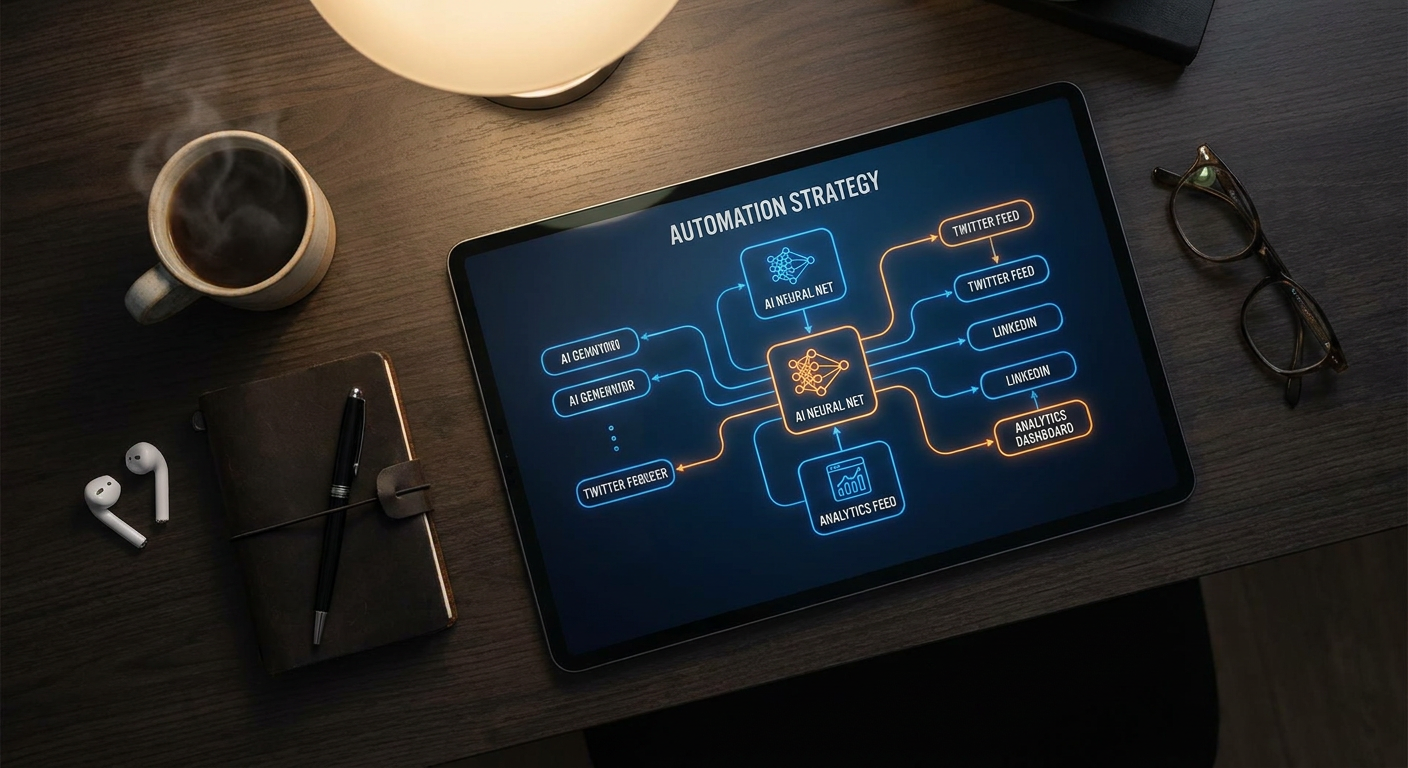
Use integration platforms like Zapier or Make to bind your stack together. A standard workflow might look like this: A trending topic is flagged by your social listening tool → Zapier triggers your LLM to write a draft based on that topic → The draft is sent to your project management tool (like Notion or Asana) for human review.
Step 4: Establish an Approval Pipeline
Never let AI publish directly to your main feeds without a safety net. Route all AI-generated copy and images into an approval queue. A human social media manager should take 5 minutes to review, tweak, and approve the batch before the scheduling tool takes over.
The Catch: Balancing Automation and Human Authenticity
Despite the incredible advancements in 2026, the primary pitfall of automated social media marketing with AI remains the same: the risk of sounding like a robot. Over-automating can strip the soul from your brand identity, alienating the very audience you are trying to attract. This hesitation has been a staple concern since AI's massive integration began:
"As of May 2024, around 43 percent of marketers said maintaining authenticity was a challenge when using generative AI for social media marketing. Maintaining the value of human creativity ranked second at 40 percent."
— Capterra (2024)
To overcome this, you must aggressively inject the "social" back into social media. Use AI for drafting, ideation, and data parsing, but rely on your human team to insert nuance, cultural relevance, and empathy. Furthermore, keep your community management—replying to comments, DMs, and engaging in threads—strictly human. People buy from people, and authenticity is the ultimate currency in today’s digital marketplace.
Conclusion: Future-Proofing Your Social Strategy
Building an AI-powered automated social media marketing engine is about working smarter, not harder. By combining the raw analytical and generative power of AI with human empathy and strategic oversight, your brand can scale its digital presence exponentially.
If you're just starting, start small. Automate one specific workflow—perhaps your weekly curated industry news roundup—and test your AI prompts. As you refine your brand's digital authenticity and gain confidence in your tech stack, you can progressively scale your automation efforts.
At MarPal, we believe the marketing teams that thrive in 2026 and beyond will be the ones that perfectly harmonize artificial intelligence with authentic human connection. It's time to fire up your engine.