

Published: July 06, 2026 | By: MarPal
The Evolution of Google Local Business Advertising Automation
For years, local business owners and marketers spent countless hours staring at spreadsheets, tweaking exact-match keywords, and manually adjusting location bids by fractions of a cent. If you are still running your advertising campaigns that way today, your competitors are already eating your market share. The landscape has undergone a dramatic shift, and manual campaign management is officially obsolete.
Today's local advertising ecosystem doesn't reward the marketer who clicks the most buttons; it rewards the business that feeds the smartest data to the machine. By embracing google local business advertising automation, forward-thinking brands are training sophisticated AI algorithms to hyper-target their ideal local customers, drastically lowering acquisition costs while scaling revenue.
We are no longer managing ads—we are managing the automated systems that manage the ads. This evolution has fundamentally changed what it takes to win at the local level.
"In 2026, Google Ads is no longer just a keyword bidding platform – it's an AI-driven advertising system... Instead of managing campaigns manually, advertisers are now training the algorithm."
Mastering this AI-driven approach is no longer a luxury for enterprise brands; it is a vital survival mechanism for every plumber, law firm, dentist, and local service provider looking to stay relevant in a fast-paced digital economy.
Decoding the Layers of AI in Local Campaigns
As the hype around artificial intelligence reaches a fever pitch, it's incredibly easy to get confused. Software vendors throw around the term "AI" as a catch-all, leaving many local business owners wondering what they are actually paying for. To truly dominate your market, you must understand how Google local business advertising automation functions in practice by decoding the specific layers of AI at work.
There are essentially two distinct layers of automation in modern digital advertising:
- The Native AI Layer (Google's Ecosystem): This is the baseline automation built directly into the Google platform. It includes Smart Bidding, Performance Max (PMax) campaigns, dynamically generated assets, and automated bidding strategies. This layer excels at micro-optimizations—adjusting bids in milliseconds based on a user's device, location, and search history.
- The External AI-Agent Layer: This is where the real market dominance occurs. External tools sit above your Google Ads account to analyze cross-campaign data, evaluate offline conversion metrics (like whether a lead actually signed a contract), and push strategic, high-level adjustments back into Google to guide the native AI.
"Google Ads AI automation is a phrase that means at least four different things depending on who's selling it... In-campaign optimization lives at Google's layer. Smart Bidding, Performance Max, automated bid adjustments. Across-campaign analytical work lives at the AI-agent layer."
When you align Google's rapid-fire execution with the deep analytical insights of an AI-agent layer, you stop wasting ad spend on tire-kickers. Instead, the automation ecosystem works holistically to identify and capture high-intent buyers in your specific zip codes.
Scaling Lead Quality with Real-Time Automation Tools
Generating leads is rarely the problem for local businesses; generating good leads is. The ultimate promise of google local business advertising automation is its profound impact on lead quality control. In the past, optimizing for lead quality meant waiting for a month-end report, manually cross-referencing your CRM with your Google Ads dashboard, and guessing which keywords drove the junk leads.
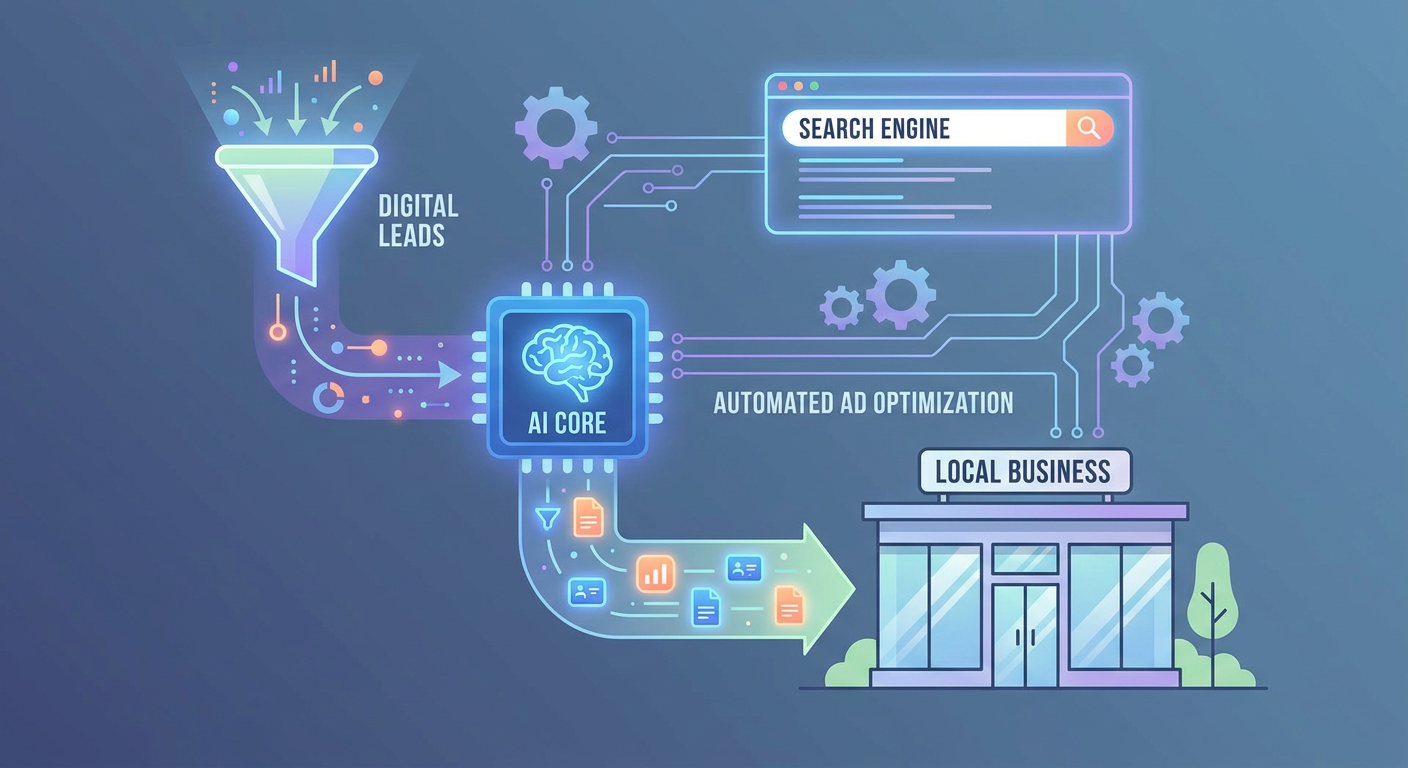
That reactive approach is dead. Today, external AI tools integrate seamlessly with ad formats like Google Local Services Ads (LSAs) to monitor lead quality as it happens.
If a specific geographic radius or time block starts producing low-quality inquiries (e.g., people looking for free advice rather than paid services), real-time automation immediately steps in. It dials back the bids, pauses underperforming assets, and dynamically adjusts your business profile to attract better prospects. Conversely, when the system detects a highly profitable conversion pattern, it instantly reallocates the budget to scale that exact demographic.
"Tools like Ryze AI automate this process — monitoring lead quality in real-time and adjusting your Local Services Ads profile to attract higher-converting prospects. Ryze AI clients see an average 45% improvement in lead-to-customer conversion within 4 weeks."
This closed-loop system ensures that your advertising dollars are exclusively focused on individuals with the highest probability of closing. It effectively removes human emotion, fatigue, and guesswork from the lead qualification process, resulting in a significantly healthier pipeline and a more profitable local enterprise.
Your Blueprint to Dominate the Local Market
Understanding the theory behind advertising automation is one thing; implementing it to crush your local competitors is another. At MarPal, we know that success in 2026 demands a structured approach. Here is your actionable blueprint to deploy google local business advertising automation effectively today:
1. Feed the Algorithm Clean, Value-Based Data
The AI inside Google is only as smart as the data you feed it. Stop tracking "clicks" or "form fills" as your primary conversions. You must integrate your CRM with Google Ads so that the system knows exactly when a lead turns into a paying customer—and exactly how much that customer spent. By importing offline conversion tracking (OCT) data, you train Google’s Smart Bidding to find buyers, not just browsers.
2. Leverage Both Local Services Ads and Performance Max
Don't put all your eggs in one basket. Use Local Services Ads to capture immediate, high-trust bottom-of-the-funnel leads (backed by the Google Guarantee). Simultaneously, deploy localized Performance Max campaigns to dominate YouTube, Maps, Display, and Search. Let Google’s native automation find the most efficient mix across all its properties while you focus on the creative messaging.
3. Implement an External AI Agent for Guardrails
Don't let Google grade its own homework. Deploy a third-party AI automation tool to sit between your CRM and your Google Ads account. Use this tool to set strict lead quality guardrails, automatically dispute bad leads in LSAs, and pause campaigns if cost-per-acquisition (CPA) spikes beyond your profitability threshold.
4. Optimize Your Digital Storefront Continuously
Automation drives the traffic, but your Google Business Profile (GBP) and landing pages must close the deal. Ensure your profile is constantly updated with fresh reviews, high-quality images, and accurate service areas. Automation tools can now schedule and optimize GBP updates, ensuring relevance and boosting your organic local map pack rankings alongside your paid efforts.
The Bottom Line
The local businesses that will thrive over the next decade are the ones that view AI not as a threat, but as their most powerful employee. By leaning into google local business advertising automation, you can step out of the daily grind of manual bid adjustments and focus on what truly matters: delivering exceptional service and scaling your operations. The tools are available, the algorithms are hungry for data, and the market is yours to dominate. Partner with MarPal today to architect your automated local growth engine.